



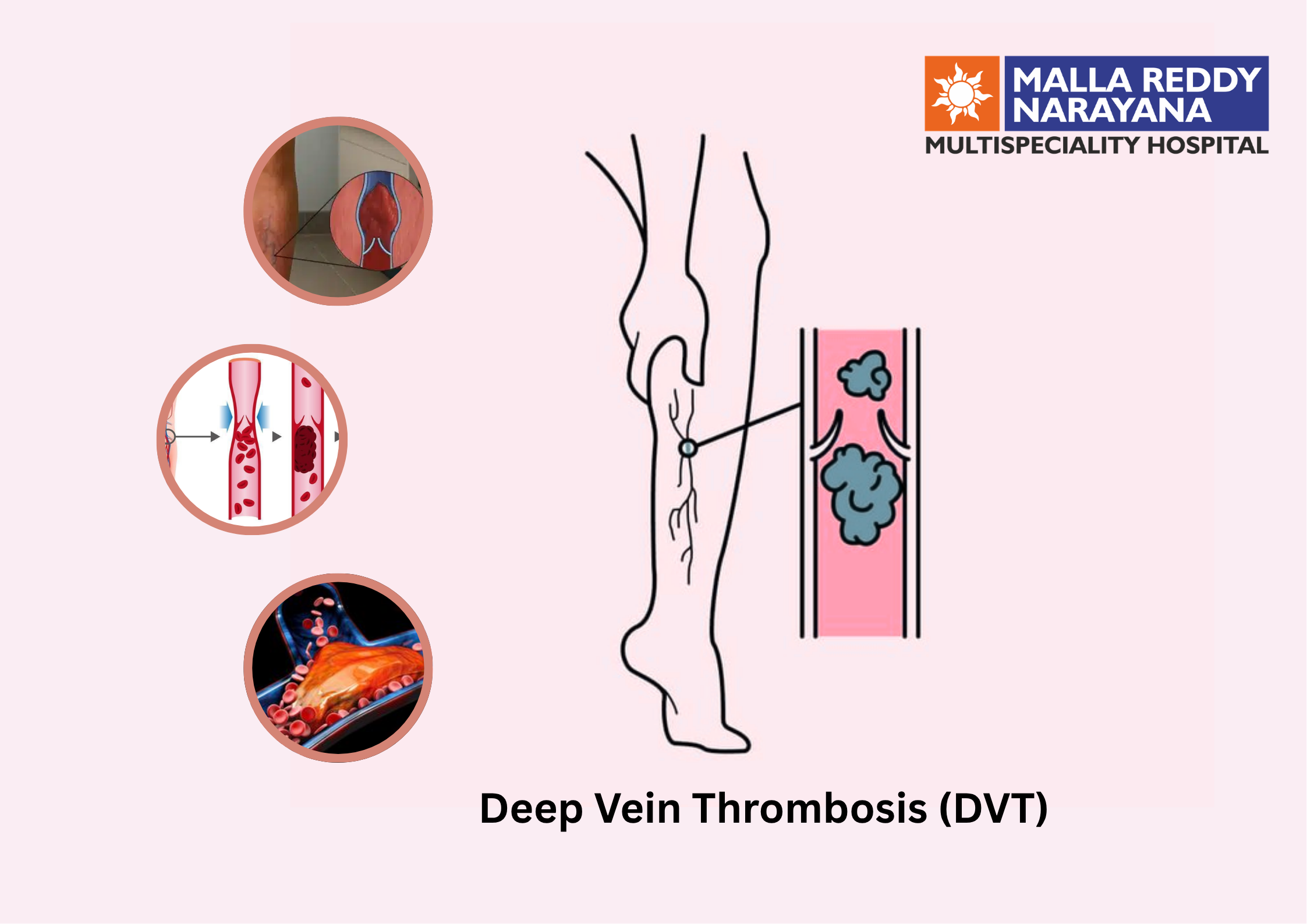
Deep Vein Thrombosis (DVT): A Silent Risk You Should Never Ignore
Deep Vein Thrombosis (DVT) is a serious vascular condition where a blood clot forms in the deep veins, most commonly in the legs. While it may begin silently, DVT can quickly become life-threatening if the clot travels to the lungs, causing a pulmonary embolism. At Malla Reddy Narayana Multispeciality Hospital (MRNH), our Department of Vascular & Endovascular Surgery focuses on early diagnosis, prevention, and advanced treatment of such critical conditions.
DVT is often overlooked because its symptoms can be subtle or mistaken for simple muscle pain. However, signs such as leg swelling, persistent pain, warmth, and skin discoloration should never be ignored. Certain individuals are at higher risk, including those with prolonged immobility (long travel or bed rest), recent surgery, obesity, smoking habits, or underlying medical conditions.
What makes DVT particularly dangerous is its “silent” nature. Many patients may not realize they have a clot until complications arise. This is why awareness and timely medical attention are crucial. At MRNH, we emphasize preventive care along with the scientifically equipped diagnostic tools to detect vascular issues at an early stage.
Prevention plays a key role in reducing the risk of DVT. Simple lifestyle modifications such as staying physically active, avoiding long periods of sitting, maintaining hydration, and following medical advice after surgeries can significantly lower the risk. For high-risk patients, our vascular specialists may recommend compression therapy or preventive medications.
The Vascular & Endovascular team at MRNH is equipped with advanced, minimally invasive treatment options that ensure faster recovery and improved patient outcomes. From accurate imaging to targeted therapies, our approach is centered on patient safety, precision, and comprehensive care.
DVT may be silent, but its impact can be severe. Recognizing the warning signs and taking preventive steps can make a life-saving difference. This DVT Awareness Month, take a step toward better vascular health with expert care at Malla Reddy Narayana Multispeciality Hospital.
FAQs:
1. What is DVT?
DVT is a blood clot that forms in the deep veins, usually in the legs.
DVT is a blood clot that forms in the deep veins, usually in the legs.
2. What are the common symptoms of DVT?
Swelling, pain, warmth, and discoloration in the affected leg.
Swelling, pain, warmth, and discoloration in the affected leg.
3. Who is at risk for DVT?
People with prolonged inactivity, recent surgery, obesity, or smoking habits.
People with prolonged inactivity, recent surgery, obesity, or smoking habits.
4. Can DVT be prevented?
Yes, regular movement, hydration, and medical guidance can significantly reduce risk.
Yes, regular movement, hydration, and medical guidance can significantly reduce risk.
5. Is DVT treatable?
Yes, with early diagnosis and proper treatment, DVT can be effectively managed.
Yes, with early diagnosis and proper treatment, DVT can be effectively managed.